By Ngala Eugine
______________
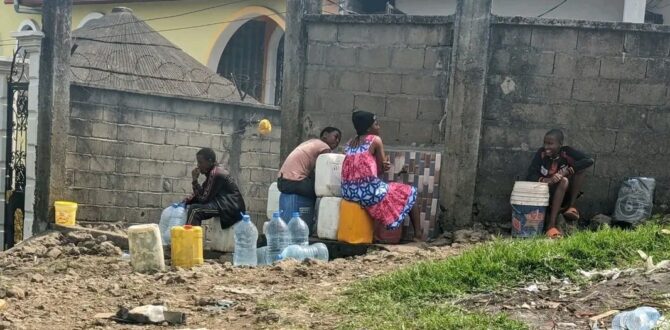
In Malingo, Buea, dawn breaks with the clang of empty buckets. Ma Fuko Celine, a mother of seven, scans the tap outside her house with quiet hope. Most mornings, it remains dry. Sometimes, it stays that way for an entire week. “Water flows here just once a week, and some weeks it doesn’t come at all. When it does, the bills are exorbitant, sometimes 15,000 to 20,000 francs a month,” she said.
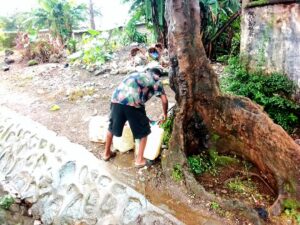
Ma Fuko has invested in large plastic containers to store enough for three days, but when they run dry, she must buy water at inflated prices. The burden is not just financial, it is emotional. “I spend more time thinking about water than about food,” she admits.
Buea lies at the foot of Mount Cameroon, the highest peak in West and Central Africa. This mountain is home to several natural springs, yet clean and safe water remains elusive for many. According to Cameroon’s National Development Strategy (NDS30), nearly 8 million Cameroonians, 28% of the population, lack access to potable water.
For university student Konga Evans, who lives in Mayor Street, the shortage is most painful in the dry season. “We mostly depend on boreholes, but the water’s safety is questionable. When the electricity goes off, the pumps stop. Then we pay truck pushers to fetch water from places like Mile 18. It’s costly, and you are never sure if the water is clean,” he says.
Water and sanitation expert, Ewube Egbe, warns that the crisis is more than a matter of inconvenience. “Urban growth in Buea has outpaced the water system’s capacity. CAMWATER’s aging infrastructure breaks down frequently. On top of that, catchment areas are being destroyed by deforestation, farming, and construction, especially in Muea, Bwitingi, and Bwiteva,” he explains.
He further disclosed that unsafe water sources raise the risk of diseases such as cholera, dysentery, and typhoid. “People end up paying twice, once for water, and again for medical bills,” he adds.
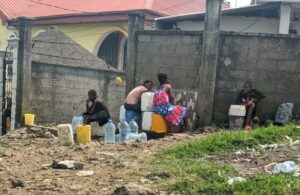
In some neighborhoods, households pool money to hire trucks to bring water. Others set up makeshift rainwater harvesting systems during the wet season. But these solutions are fragile. One long dry spell, and the city’s thirst deepens.
Ewube believes recovery is possible with coordinated action: reforesting watersheds, enforcing buffer zones around springs, upgrading pipelines, expanding storage reservoirs, and introducing decentralized solutions like solar-powered boreholes. But for now, Buea residents continue their daily ritual, searching for water, storing it, rationing it, while living on one of Africa’s most water-rich mountains.


