
By Jabi Katy Chale & Ngala Eugine
___________________
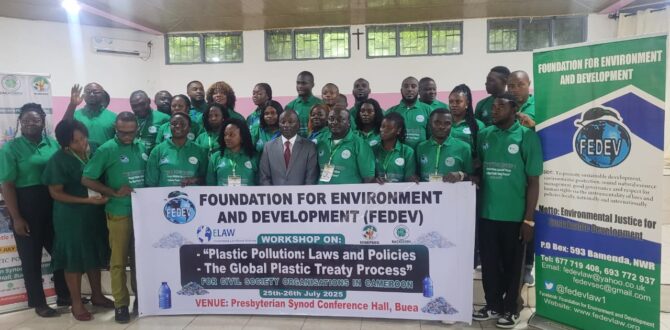
The Foundation for Environment and Development (FEDEV) and partners recently empowered some 30 environmental Civil Society Organizations (CSOs) with policies and laws crucial for the fight against plastic pollution and advancing environmental protection efforts. This was during a two-day workshop, 25–26, 2025, in Buea on the theme: “Plastic Pollution: Laws, Policies and the Global Plastic Process.”
FEDEV organised the workshop in partnership with Back2Eden and Environmental Law Alliance Worldwide (ELAW) under the auspices of the Ministry of Environment, Protection of Nature and Sustainable Development (MINEPDED), to consolidate Cameroon’s civil society input ahead of the Intergovernmental Negotiating Committee (INC-5.2) meeting on the Global Plastics Treaty, scheduled for August 2025 in Geneva.
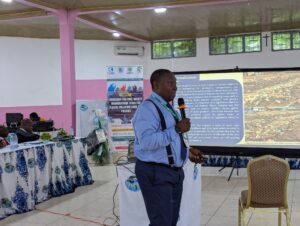
Opening the workshop, FEDEV Executive Director, Barrister Justice Sama Nchunu, underscored the gravity of plastic pollution as one of the three most pressing planetary crises, alongside climate change and biodiversity loss.
“Plastics are part of our daily lives, but the environmental footprint now far outweighs the benefits. Addressing this challenge requires rigorous implementation of laws, backed by strong community action and scientific evidence. There is a need to enhance the capacity of CSOs and raise awareness to leverage their contributions towards the fight against plastic pollution,” he said.

According to FEDEV, plastic waste in Cameroon has more than doubled over the past four years, causing environmental and economic losses estimated at over $60,000 annually, while posing serious risks to human health and biodiversity.
Representing the Minister of Environment, Protection of Nature, and Sustainable Development, the South West Regional Delegate for MINEPDED, Mr. Set Ekwadi Songe, echoed the call for legal awareness and strategic involvement of CSOs. “Advocacy and awareness-raising are among the most effective strategies to combat environmental challenges globally. Civil society actors play a vital role in fostering policy implementation and sustainable innovation. Their grassroots presence, capacity to monitor, and ability to push for accountability are indispensable in ensuring a healthy planet for current and future generations,” he stated.
Workshop sessions focused on Cameroon’s legal frameworks governing plastic use and waste management, such as the 2011 National Policy on Plastic Packaging, which aims to reduce plastic packaging waste by 30%, as well as Article 46 of the Environmental Code, which mandates local councils to eliminate household waste. Participants also examined Decree No. 2012/2809/PM and Decree No. 2012/0882/PM, which outline the roles of local governments in waste treatment and management.

Despite the existence of these policies, enforcement has remained a significant challenge. Workshop organisers and attendees voiced optimism that enhanced CSO engagement and legal literacy could help bridge enforcement gaps and drive effective action against pollution.
Participants lauded the workshop for its relevance and practicality. “My expectations were fully met. I now understand government laws on plastic waste and how to manage and separate household waste effectively,” Tiah Alima from Clean Water and Sanitation for Africa (CWASAF) shared.
Chingeson Franklin from Women for a Changed Cameroon added, “The workshop helped me understand global plastic negotiations and the gendered impacts of pollution. I learned strategies such as incineration and recycling. Waste management must be a collective effort, and we plan to sensitize the younger generation to adopt better waste practices.”
With global negotiations on a binding plastics treaty underway, Cameroon’s environmental actors are positioning themselves as informed and proactive stakeholders. FEDEV’s initiative is seen as a crucial step toward aligning local action with international policy developments.
As plastic waste continues to plague urban areas and natural ecosystems in Cameroon, such capacity-building efforts are being hailed as vital to reversing environmental degradation and advancing sustainable development.


