
By Ndimuh B. Shancho
________________
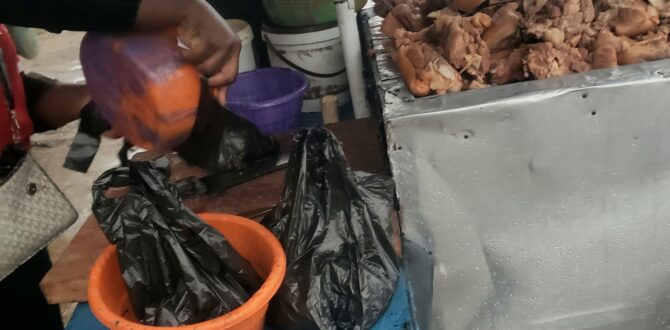
The packaging of hot food items, including grilled pork (soya), cooked beans, puff-puff, fried potatoes & eggs, directly into small thin plastic bulletins for customers by food vendors has become a new normal in many urban centers across Cameroon. This practice usually appears convenient and cost-effective, but poses serious health risks that many are either ignorant of or have simply decided to overlook.
These plastic wrappers used are often less than 60 micrometers thick, with limited ability to withstand the high temperatures from the grilled pork, beans, puff-puff and others just coming out from hot oil. When such hot food is placed directly into these lightweight plastic wrappers, most of which are made from low-quality polyethylene or recycled plastics, harmful chemical compounds leach into the food. These chemicals are known endocrine disruptors and have been linked to a wide range of health problems, including hormonal imbalances, infertility, developmental delays in children, and even cancers of the breast, prostate, and liver.

I had a disturbing experience recently at a pork spot in Check Point, Buea. As the vendor attempted to put freshly fried pork and ripe plantains into a thin black plastic, I intervened and asked him to use aluminum foil instead. He looked at me, surprised, and replied, “No one is complaining. What do you want to prove? Too much education is not good.” Other buyers nearby were visibly annoyed, accusing me of wasting their time.
This reaction reflects a broader problem: vendors’ ignorance and buyer negligence. Many are unaware that these plastics are often made from recycled non-food containers containing residual dyes, industrial chemicals, or pesticides. When exposed to heat, especially from oily or acidic foods, these toxic substances can rapidly migrate into the food, increasing health risks.
Beyond the health risks, this habit contributes to environmental pollution. The single-use plastics often end up littering the streets, clogging drainage systems, and polluting rivers and urban green spaces, worsening waste management challenges.
The Cameroon Government banned the importation and use of these non-biodegradable plastic bags in 2014 but the enforcement of this ban has been inconsistent, with these plastics still widely in circulation. The thriving black market, weak monitoring, and limited public awareness continue to undermine the effectiveness of this ban over 10 years later.
The packaging of hot food in these thin plastics is undoubtedly a serious public health issue, requiring both behavioral change and government restrictions. Vendors must, as a matter of urgency, switch to banana leaves, aluminum foil, and reusable containers. Customers should also make it a culture to always carry their own food containers from home to avoid being victims of health risks associated with putting hot food in thin plastic bags, including hormonal imbalances, infertility, developmental delays in children, and even cancers of the breast, prostate, and liver, both in the short and long run. Stopping the use of thin plastics for hot food in our town and cities in Cameroon will be a powerful step toward safeguarding lives and the environment.


