
By Ngala Eugine*
_______________
Smallholder farmers in Buea, South West Region of Cameroon, are facing growing challenges with post-harvest losses due to inadequate crop preservation methods. Many enjoy abundant yields during the harvest season, but a significant portion of their produce gets bad before they can be consumed or sold, leading to financial strain and food insecurity.
A 45-year-old mother of three, Bih Constant, who has farmed in Buea for over two decades, is one of those who has come face-to-face with this reality. “There are times we experience heavy losses because we had surplus farm products but did not have enough storage facilities. There was a time I had a good maize harvest but could not dry it all in time; some of it germinated, and I lost everything. Sometimes, I am even forced to sell at very low prices because the produce is already starting to spoil,” she said.
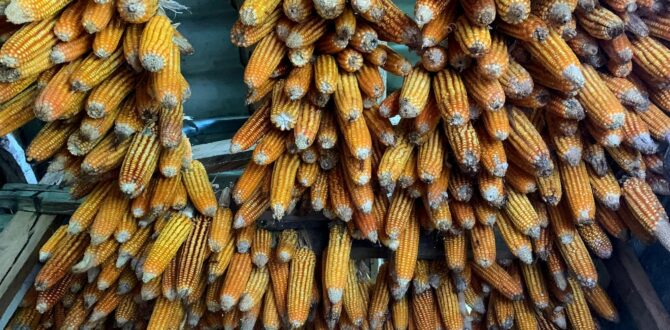
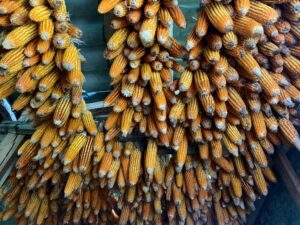
To reduce losses, farmers like Bih have resorted to traditional methods of preservation, though some of the methods are labour-intensive with associated health risks. “When I harvest maize, I either store it in a barn or peel and tie the cobs so air can dry them faster. We have to keep checking it to make sure it has not gone bad. After drying, I crack the corn, store it in containers, and use insecticide,” she explained.
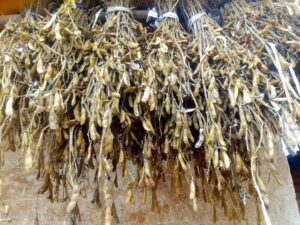
A 65-year-old farmer, Ma Irine Tata, who supports her family through subsistence agriculture, uses similar traditional methods. “For yams, cassava, and potatoes, I store them on uncemented floors and spread them out to prevent spoilage. With beans, I make sure there is enough air circulation. Some farmers use chemicals to prevent maggots or decay, but I try to avoid too much chemical use; it is not good for our health,” she said.
While traditional techniques play a role in preserving crops, agricultural experts say they are increasingly inadequate in the face of climate variability and modern food safety standards. “Farmers use various preservation methods, but the effectiveness varies. Traditional methods like wood ash or plastic containers can help, but they are not the most efficient. Modern preservation techniques like moisture control, airtight storage, and temperature regulation offer better results,” explained Jick Nelson, an agricultural expert working with local farmers.
Nelson also warns against excessive use of chemicals, which are sometimes added to already pesticide-treated crops. “Too many chemicals can lead to dizziness, fever, or even pesticide poisoning. Long-term exposure has been linked to increased cancer risks,” he said.
To mitigate these risks and reduce losses, Nelson recommends that farmers adopt sustainable practices, including harvesting crops at the right maturity stage, integrating both natural and carefully regulated chemical methods, using improved storage systems, and receiving regular training in post-harvest handling.
According to the Food and Agriculture Organization (FAO), about one-third of food produced globally, roughly 1.3 billion metric tons, is lost or wasted annually. In Africa, post-harvest losses account for 15 to 30 percent of grain production, according to the African Development Bank. The problem is especially acute in Cameroon, where agriculture employs the majority of the population and contributes nearly 70% to the country’s GDP. In the Far North Region alone, the Ministry of Agriculture estimates that up to 40% of harvested crops are lost after harvest. For farmers like Bih Constant and Ma Irine Tata, addressing post-harvest loss is not just about improving income; it is about survival, food security, and ensuring that their hard work feeds their families and communities.
UB Journalism Student in Training


